Stop Wasting Money on Leather The One Difference That Changes Everything
By admin | May 15, 2026 | Clothing Resource
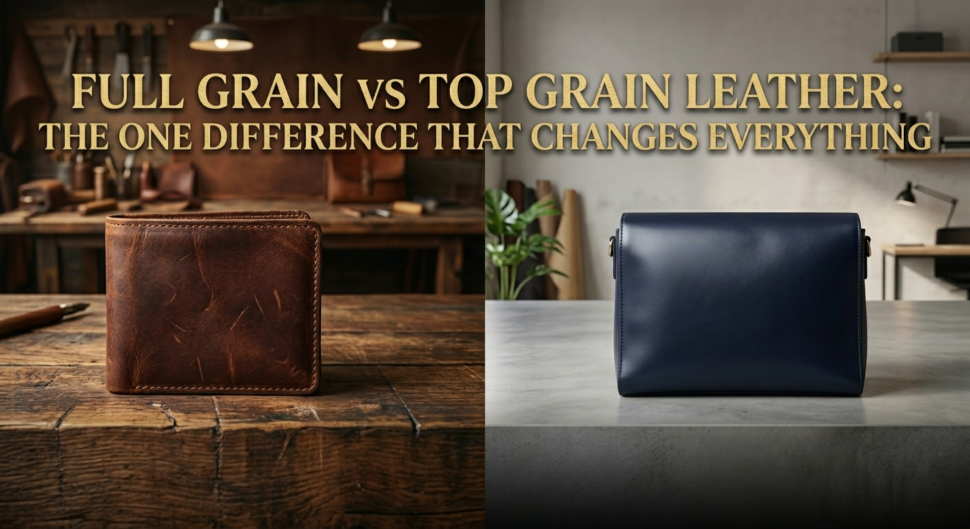
You’ve read the labels. Full-grain leather. Top grain leather. Genuine leather. Premium leather. They sound impressive. They’re displayed on product pages, store tags and brand websites. Most of the time, they have no significance at all to the person purchasing.
The fact is, the leather industry has a language problem. Words are abused, brands extend definitions, and consumers purchase products that don’t last or age well, and that, quite frankly, don’t warrant the price.
However, there is one aspect that rises above the noise. There’s a difference that, with knowledge of it, will make any leather purchase better, wiser and more confident.
By the end of this guide, you will know what it means, why it’s important, and how to use it to avoid wasting money on leather products that don’t live up to their expectations.
At Rays Creations, we work with leather every day. So, let’s be real.
First, How Is Leather Actually Made?
The difference between leather grades requires an understanding of the structure from which leather is derived. It’s a quick one, bear with us, and everything else needs to work.
Cowhide (and other hides) have identifiable layers. Imagine that it is a cross-section:
This outermost layer is the closest and most dense of fibres right on the surface of the animal’s skin. It is the natural grain where this is. The grain is the texture that you see on natural leather, which are the subtle differences, marks and patterns that can be traced back to the animal’s actual life. Any scarring, insect bites, and growth marks all left marks on the hide.
Lower layers are increasingly loose and light fibre layers. These layers are less strong, more porous and less durable than the surface itself.
Why is that important? The nearer the leather is to the surface of nature, the stronger it is, the more durable it will be, and the more beautiful it will be over time. And this is exactly where full-grain leather and top-grain leather diverge.
What Is Full Grain Leather?
When a full-grain leather is cut, the outermost layer of the hide is used and not treated. No sanding. No buffing. No paint to conceal flaws. It is not cut at all to reveal the natural grain.
With full-grain leather, every natural marking that the animal has is preserved. There are little scars, different textures, and subtle irregularities. This could seem like a flaw to a person not familiar with leather. For one who does, it’s the evidence of quality.
Why Full Grain Leather Is the Best
The surface of full-grain leather is very dense and tightly woven. This makes it:
Full-grain leather is the most durable grade of leather, which is extremely resistant to moisture, abrasion and daily wear. A good quality full-grain wallet or bag will last years, if not decades, longer than a real leather wallet.
It is the feature which makes this distinguish it from everything else and makes it self-improving with age. The leather patina is a rich, warm darkening and deepening of colours that result from oils, light and usage, that occurs over time. Unlike most other leather types, leather that is made using full-grain leather does not lose its beauty as it ages. It tells a story. This is not marketing jargon; it’s a true quality of the content.
Full-grain leather is breathable and responsive, as the surface was not sealed or coated, but rather is leather that breathes naturally. It can be conditioned with oils, remains soft with treatment, and doesn’t become as hard and plastic as lower-quality leathers.
What is the one disadvantage of using full-grain leather?
It costs more. It reveals its characteristics in its natural state, such as little marks, little texture variation, etc. This is what some consumers consider to be “imperfect”. To those who know leather, it’s true leather brought to light.
Discover Rays Creations Leather Wallets Collection, Handcrafted from Full Grain Leather, designed to last a lifetime.
So what exactly is Top Grain Leather?
The top grain leather is also a part of the upper layers of the hide, but it has a difference. Even the surface is sanded or buffed to eliminate natural imperfections, and an artificial finish or coating is added to ensure a uniform and smooth surface.
The outcome is leather that is more sanitary and uniform than full-grain. No marks, no colour changes, no imperfections. Everything is even and shiny out of the box.
This is why top grain leather is a popular choice when it comes to fashion and luxury items. It photographs beautifully. It appears to be in pristine condition on a shelf. It is appealing to buyers who want a neat and uniform look.
The Real Cost of Sanding the Surface
This is where the trouble begins, and where this distinction is so significant.
The densest and strongest part of the leather is the natural surface when sanded away. The hardcore structure of the fibre, which makes full grain so durable, is literally eroded. What is left is a slightly lesser strength porous layer that requires an artificial coating to aestheticise it.
What this means in practice:
- The patina won’t form as quickly in top grain leather. The artificial surface coating stops the natural ageing process. Unlike natural leather, top grain leather deteriorates over time by peeling, cracking or uneven wear, which is caused by the breakdown of the coating.
- It does not allow as much air to flow through as full grain does. The coating prevents the leather from being affected by the natural conditioning process.
- With years of use, top-grain leather wears out and becomes aged. The leather types age into the better, full-grain leather ages into the better.
However, top grain leather is not “bad” leather. It is the second-highest grade, and a good-quality top-grain product is still far better than a real leather or bonded leather. When durability isn’t paramount, top grain is just fine.
Shop Rays Creations Leather Bags Collection: Quality leather bags for timeless style.
Full Grain vs Top Grain Leather: Side by Side
Let’s put the key differences in plain terms:
| Feature | Full Grain Leather | Top Grain Leather |
| Surface | Natural, unaltered grain | Sanded and artificially finished |
| Durability | Highest | Very good |
| Ageing over time | Develops rich patina, improves | Coating wears down, degrades |
| Appearance | Natural texture, slight variations | Uniform, clean, consistent |
| Breathability | High, natural surface | Lower, sealed by coating |
| Price | Higher | Moderate to high |
| Best for | Long-term investment pieces | Fashion-focused, appearance-first |
Explore Rays Creations’ Leather Accessories Collection. Discover premium leather accessories that combine quality with everyday elegance.
Where Does “Genuine Leather” Fit In?
It’s a question we’re asked all the time, and the answer should be straightforward.
Genuine leather is not a grade of leather. The term simply means “made from real animal hide” and does not specify the part of the animal that it came from or how it was processed.
Real leather is, in fact, usually tanned from the bottom layers of the hide, the looser and weaker fibres left behind once the top layers have been separated to produce full grain and top grain leather. These layers will need intensive artificial processing and coating to present well.
The outcome is leather that looks like leather but feels like leather for a short time, but wears out subsequently. It wears out quickly, compared to full-grain or even top-grain leather. Anyone who has ever had a wallet or a bag that broke after 12 months or so has almost certainly had a real leather wallet/bag.
The big misunderstanding: When you see the words “genuine leather,” many people assume that this is a sign of real, high-quality leather. Ironically, it’s a warning sign of the opposite. The real leather is technically real leather, but the lowest quality real leather.
The Leather Quality Hierarchy (Simplified).
- Full Grain Leather, best. Natural surface (not changed) becomes patina.
- Top Grain Leather, very good. Sanded surface, artificial surface or a clean look.
- Genuine Leather, Acceptable for low-use items. Reduce the number of hide layers and/or heavy processing.
- Bonded Leather, Avoid. Scraps of leather that are glued together. Not in the true sense of leather.
Visit Rays Creations’ Leather Belts Collection to discover full-grain leather belts that defy trends and last for decades.
What is the value of Full Grain Leather?
Let’s talk candidly about value.
The price of full-grain leather products is higher initially. It is possible that a full-grain leather wallet could cost two to three times as much as a genuine leather wallet. This is the reason that some buyers hesitate to purchase.
However, think of the calculation over the course of time.
A real leather wallet can last for 1 – 2 years, after which it begins to peel, crack and lose its shape. If you need to replace it, you may do so 5-7 times in 10 years.
A properly maintained full-grain leather wallet can last 10 – 20 years. It won’t peel. It won’t crack. It won’t degrade. With years of regular use, it will darken, become characterful and be uniquely yours.
If you include replacement cost, it’s nearly always cheaper to buy the “expensive” full-grain wallet than any other option over any conceivable time horizon. Most important of all is the sense of ownership that comes with a full-grain piece that simply cannot be mimicked by a disposable wallet.
That’s why we employ full-grain leather in our wallet collection at Rays Creations. Not necessarily the easiest or the cheapest material to work with, but it’s the only material we’d like to take with us.
Explore Rays Creations’ Leather Wallet Collection. Every wallet is handcrafted from full-grain leather. Zero compromises.
How to Identify Quality Leather Before You Buy
Not all brands will specify the grade of leather used. Here are some ways to make the distinction yourself:
- Note the texture of the surface. Full-grain leather is natural, with a variation of textures visible. When it looks like this, it has been sanded and coated, and is in fact completely even, with every centimetre the same.
- Check the edges. Full-grain leather has tight, dense fibres when the leather is cut on the edge. Authentic leather tends to have a more natural, even edge, possibly with glued layers in bonded leather.
- Smell it. Real quality leather will have a unique, earthy, rich aroma. Artificial coatings and bonded leather tend to have a more chemical or synthetic odour.
- Feel the flexibility. Full-grain leather is soft and natural. Thick coatings may cause a slight stiffening or clinginess effect in leather, particularly in cold weather.
- Check for the patina test claim. If a brand really uses full-grain leather, it will make reference to patina and ageing in its product descriptions since it is a selling point, not a flaw.
How to Care for Full Grain Leather
The care of basic leather is a major factor in the lifespan and appearance of the leather and is crucial if an individual is investing in full-grain leather.
Condition regularly: Apply a good leather conditioner to the fibres periodically to make them supple and free from drying or cracking. The full-grain leather is very receptive to conditioning, as it is porous.
Keep it dry: In case of water getting into leather, allow it to air dry at room temperature. Leather may become stiff or crack when exposed to heat sources, hairdryers, and direct sunlight.
Embrace the patina: Try not to try to get your full-grain piece back to its original colour. The darkening and character that develops upon use is the point. That’s what makes full-grain leather special.
Store it properly: Store leather products out of direct sunlight and in a ventilated area. Do not use plastic bags as they will retain moisture.
Explore Rays Creations’ Leather Bags Collection, beautifully crafted leather bags designed to age gracefully with you.
Frequently Asked Questions (FAQs):
Q1. What is the difference between full-grain and top-grain leather?
A1. Full-grain leather is the top layer of the leather; the top grain is not sanded or buffed. This is the hardest grade and will give a nice patina with age. Top grain leather is the surface of the leather which has been sanded off to eliminate imperfections and then treated with an artificial finish. It appears cleaner at first, but it is not as long-lasting, and it does not achieve the same patina.
Q2. Is full-grain leather worth it?
A2. Yes, particularly for everyday carry accessories such as wallets, bags and belts. Full-grain leather is more durable than top-grain leather, gets better with age, and will remain structurally sound for decades of use. The up-front expense is invariably more than made up for by the vastly extended life.
Q3. What does “top grain leather” mean?
A3. Top grain leather is made from the outermost layers of a hide, but the surface has been sanded to remove blemishes, which are then treated with a uniform artificial finish. The second-highest leather grade is still just as quality as genuine leather, but not as durable or at least as character development.
Q4. Is top grain leather real leather?
A4. Yes! Top grain leather is leather! Made from real animal skin (usually cowhide). The difference is that its surface has been modified by man. It’s not synthetic or bonded leather; it’s just been processed more than full grain.
Q5. What is genuine leather, and is it good quality?
A5. True leather is leather that is on the low end of the spectrum. It’s from the lower, looser layers of the hide and is heavily processed artificially. It is more prone to wearing, peeling and cracking than full grain or top grain leather. You will not find “genuine leather” to be a measure of quality with its name.
Q6. How can I tell if leather is full-grain?
A6. Search for natural texture variation on the surface, small marks, pores and slight irregularities that demonstrate the texture has not been changed by the grain. Full-grain leather also has a natural, earthy scent, acquires a patina with use and is easily conditioned. If the surface appears to be completely flat and even, the leather is probably sanded and coated.
Q7. What leather is best for wallets?
A7. The ideal leather for wallets is full-grain leather. It’s thin enough to be used in creating thin, elegant wallet designs, and tough enough to be carried for years or decades. It creates a lovely patina with time, and your wallet becomes even better looking with use. Precision leather, at Rays Creations, is used throughout all of our high-end wallets because of this.
Final thought
There are a lot of impressive-sounding terms in the leather industry that little to no one understands. But full-grain vs top-grain leather does make a difference, and here’s why.
The leather is actually full-grain leather. Leather that will never fade, hold up well with time, and will age gracefully with use.
Top grain leather works well for products that are meant to look good and have a uniform appearance, rather than those that are meant to last for decades.
Legal leather is real leather, but don’t be misled by the name.
The leather you purchase represents a decision regarding what is important to you today: appearance or quality over the years. When it comes to daily-carry items, wallets, bags, and belts, full-grain leather is the best investment you will make in them.
Explore the Rays Creations Wallet Collection
In Rays Creations, we know that what you’re walking around with daily should be made with full-grain leather, which is the highest quality we can obtain, and we have high expectations for its quality.
Over the years, our handmade leather wallets will acquire a rich, personal patina and will turn yours uniquely, which no mass-produced wallet could ever achieve.
No Comments yet!